I wrote this essay as part of my A-Level EPQ. It was accompanied by an artistic portfolio demonstrating some of the principles I write about, and some examples of the art I write about. I have attached the images from the portfolio to accompany the writing. It is quite colloquially written, rather than an academic essay. I have reviewed it and updated where appropriate.
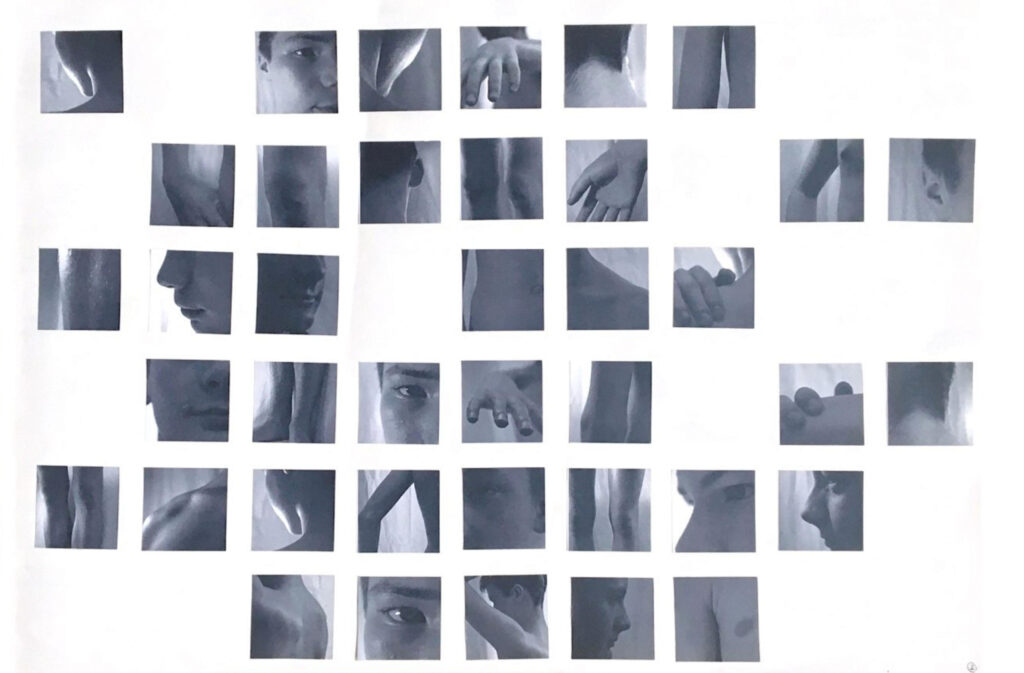
Every day, everywhere we look, we see it. We scrutinise it, criticise it, envy it: all in a fleeting glance. It comes in so many shapes, sizes, colours yet changes so very little. It has the power to express an emotion, tell a story or convey an opinion in the subtlest gesture. When we take the time to appreciate it, it could be considered the most remarkable and expressive tool on Earth. It is, of course, the human body.
For many people, the body is their art form. Whether it plays the canvas or the medium, it is manipulated and distorted to express thoughts, feelings and ideals. In essence, the human body can be or show whatever anyone wants. Yet what is interesting is not just how we manipulate images of the human body, but why? Why do we like these images when they often barely resemble a human? Why are we so stimulated by these physiological impossibilities? Is this a social influence, or are we born to think in this way?
Before we can understand why we like distorted images of the human body, I believe we have to begin with how and why we exaggerate and distort them in the first place. Various artefacts from three of the most iconic periods of early art can show us factors which impact our art and lead to these distorted human forms.
Supernormal Stimuli
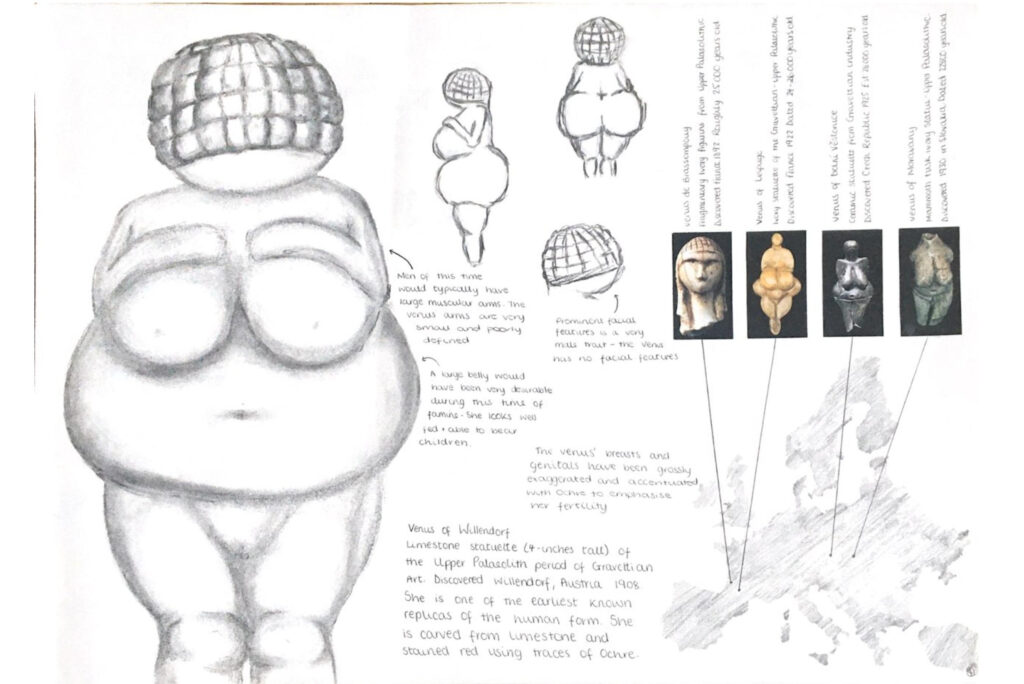
The Venus of Willendorf was discovered in 1908 during the excavation of a Palaeolithic settlement in Willendorf, Austria. She is a four-inch statue of a female body, believed to represent the pinnacle of femininity. Her face and head are covered by a textured pattern, diverting the focus away from it. Similarly, her arms are virtually non-existent, and she does not have any feet. What makes her most remarkable is the gross exaggeration of her most feminine features. Her breasts are unattainably large. They sit above a plump and swollen belly, which in turn rests above thick voluptuous thighs. The body reflects that of someone who is extremely well fed which would have been highly desirable in this time of famine. But the most fascinating aspect about the Venus is that she is not unique. Soon after her discovery, similarly distorted models were discovered across Europe: France, Italy, Germany, Czech Republic. From studying traces and migration patterns of the tribes, we can see that these almost identical figurines were in fact created by various different tribes. Knowing that there was no intertribal contact, we can only assume that it was a natural, inborn influence which not only stimulated the Palaeoliths to exaggerate, but also to the same features time and time again.
We can provide a potential explanation for this based on research carried out by the Dutch biologist and ornithologist, Nikolaas Tinbergen. His work towards The Study of Instinct, looked at the behaviour of animals; most specifically, ‘spontaneous’ behaviours which occur in their complete form the first time they are performed and tend to be resistant to the effects of learning. The part of Tinbergen’s work which concerns our Palaeolithic ancestors’ art is a phenomenon termed ‘Supernormal Stimuli’. The concept being that one could artificially produce an object ‘which was a stronger stimulus or releaser for an instinct than the object for which the instinct originally evolved’. Or in Layman’s terms, an artificially enhanced stimulus is more stimulating than the natural form, despite bearing little resemblance to the original stimuli.
His most famous study involved Herring Gull chicks. He observed that the chicks would tap their beaks on the red stripe on their parent’s beak and in response, the parent would regurgitate food for them. Initially, he presented the chicks with a range of yellow sticks in a variety of colour intensities, some with red stripes and some without. The chicks were not interested in the yellow sticks without red stripes which indicates that it is the red stripe which acts as the stimulus. He then went on to show the chicks a yellow stick with one red stripe (to resemble a beak) and a yellow stick with three red stripes (the artificially enhanced object). The herring gulls all tapped on the stick with three stripes at a very vigorous pace and none of them showed any interest in the stick with one stripe. This indicates that the gulls were much more stimulated by the three stripes, despite it being unrealistic and unnaturally enhanced, hence supporting the theory of Supernormal Stimuli. Further research in male Stickleback fish and male Butterflies showed yet more proof of the Supernormal Stimuli effect. Due to its exaggerations, the superstimulus clearly portrayed the characteristics which originally stimulated the instinctive response- either in an enhanced form or through the removal of other stimuli- which then, therefore, produces an exaggerated response.
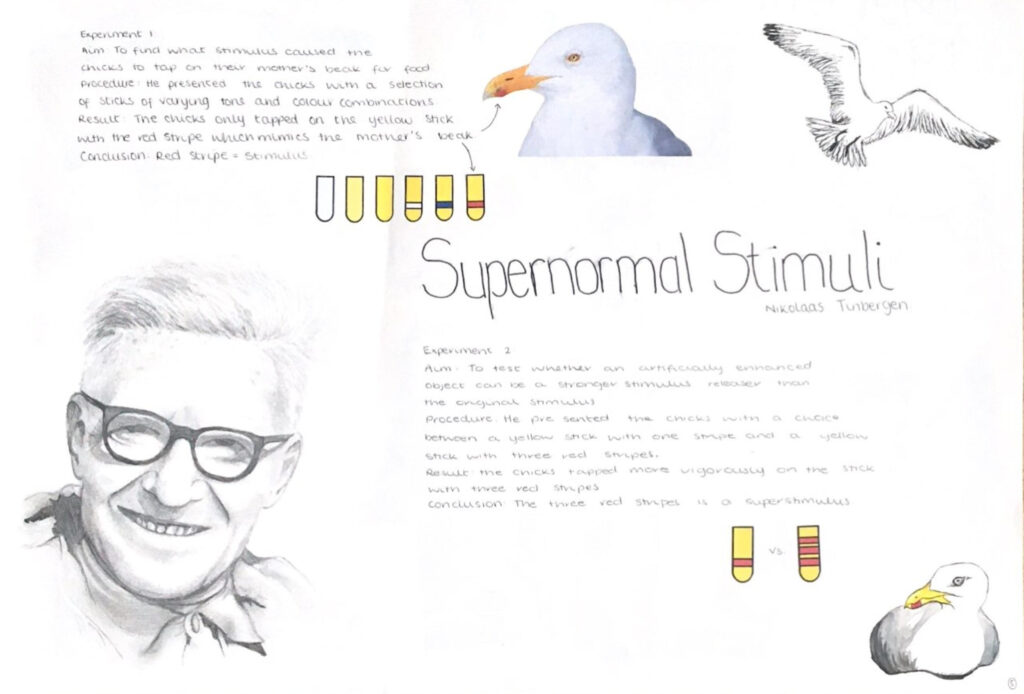
Based on this research, it is likely that Venus figurines were designed- like most art- to invoke a feeling of aesthetic pleasure and awe, and that Tinbergen’s work suggests that the gross exaggeration of the ‘pleasurable features’ elicits a much stronger response of pleasure in the viewer. It is possible that this response to the image lead the Nomads to believe the Venerēs were magical or lucky causing many different tribes to make such strikingly similar statuettes.
The Human Rasa
The next era of art to consider is that of the Egyptian period. Here we once again see these grossly distorted images of the human body, ranging from the smallest painting to their 20 metre tall Sphinx statues, but this is due to an entirely different influence. We first have to reference the fact that Egyptian art was made to serve an entirely different purpose to our modern day equivalents. It was not made to be seen or admired, and to fully understand these structures and artefacts we must interpret them from the Egyptian viewpoint. The statuary and reliefs were supposed to benefit a highly regarded individual during the rituals believed to take place as the soul journeys into the afterlife. The art was not designed to be beautiful, it was designed for functional purposes and left enclosed in the tombs and temples. We can see this functionality reflected in the way these images are presented. It is a common misconception that the iconic Egyptian style was evolved from a lack of tools and skills. Whilst this will obviously have had an impact on their works, the reason for this paradigmatic form of the human body is for purely functional purposes.
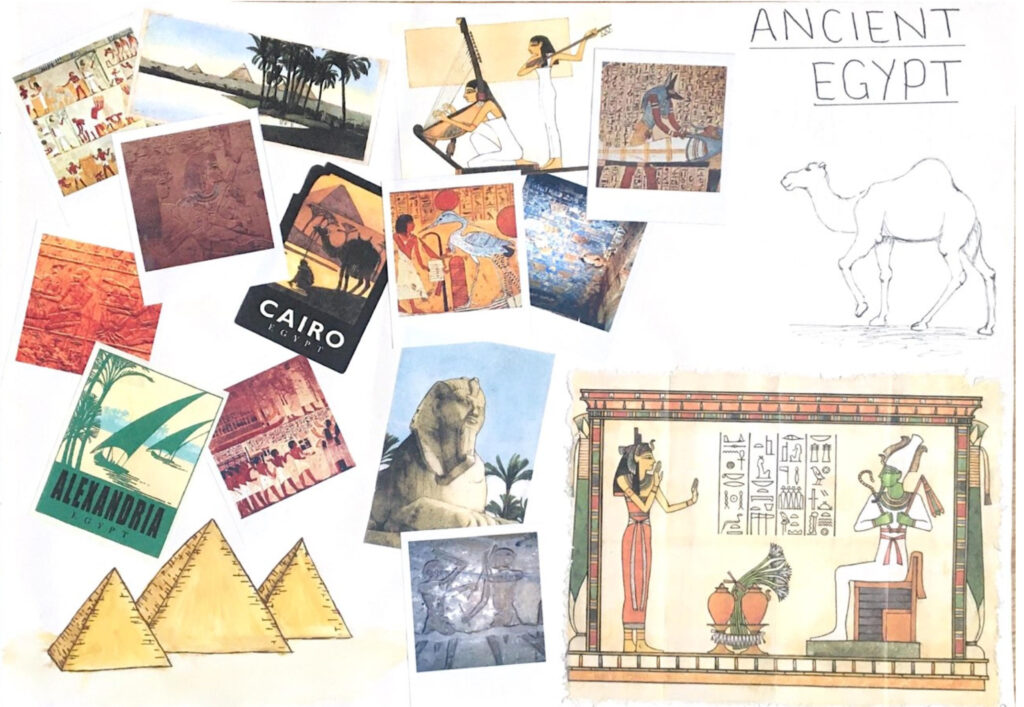
The torso is depicted facing forward, making it as easily recognisable as possible. Face and feet are viewed from side on as this is once again the most easily recognisable angle. The one eye showing, however, is viewed from the front to make it fully distinguishable as an eye. The images were overlaid on a grid so that every human form was in the exact same proportion and easily replicable, once again reflecting the functional purpose of the Egyptian style.
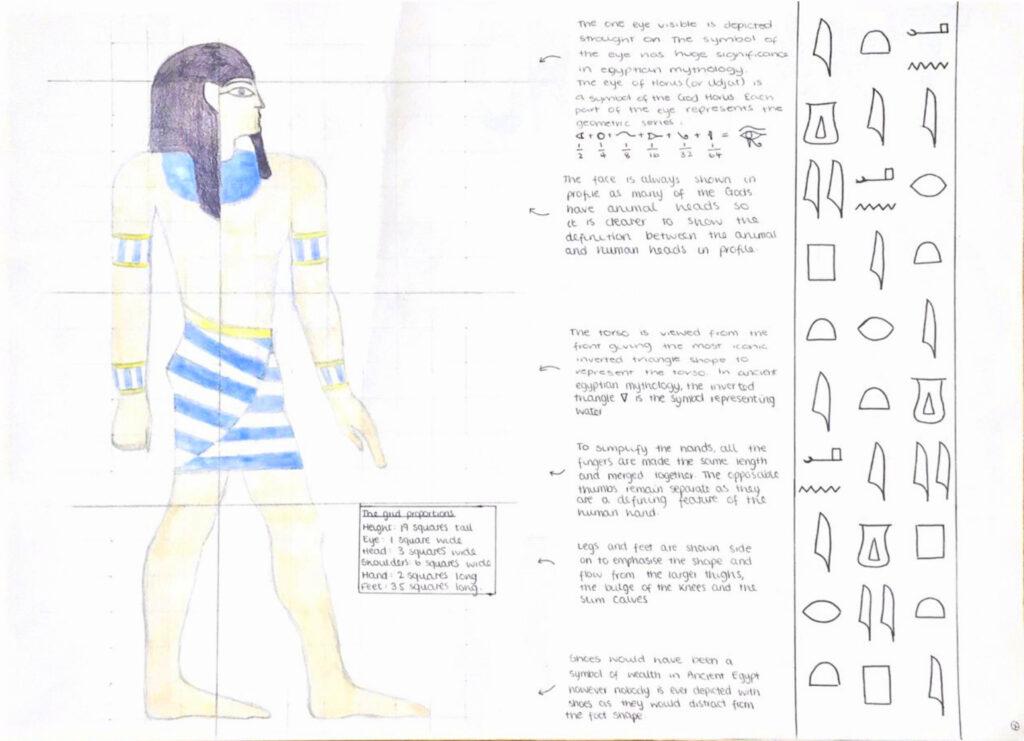
We can also see the image functionality reflected really clearly in the design of the image. This minimalistic style removed any features which would distract from the main function of the image; the idea being that instead of a fully anatomically correct image, we can just use certain features to create the ‘rasa’ of a human body.
Rasa is a Sanskrit term to mean the flavour or essence of the item. For example, the Venus of Willendorf is supposed to be the epitome of femininity so in order to create this rasa of femininity in her form all of the female features such as thighs and breasts have been really exaggerated, but on the other hand, any masculine features such as large muscular arms or prominent facial features have been almost completely left out. Similarly in early religious scriptures, particularly depicting the story of Adam and Eve, the images are crude and genderless bases with specific gender features added at the end to really emphasise the gender differences in the images as they are the only differentiating feature making it easy to recognise one gender from another. This period of art shows that we can exaggerate or downplay features for ease of recognition in functional drawings as we only need to give the rasa or essence of the human form.
More human than humans
So, what happens when we create a ‘perfect’ copy of the human form? Greek art developed very quickly after discovering the tools and methods used by Egyptian sculptors. The Greeks believed that Gods took a human form and so they began to create statues of these humanoid Gods: their aim being to create exact replicas of the human form in statues.
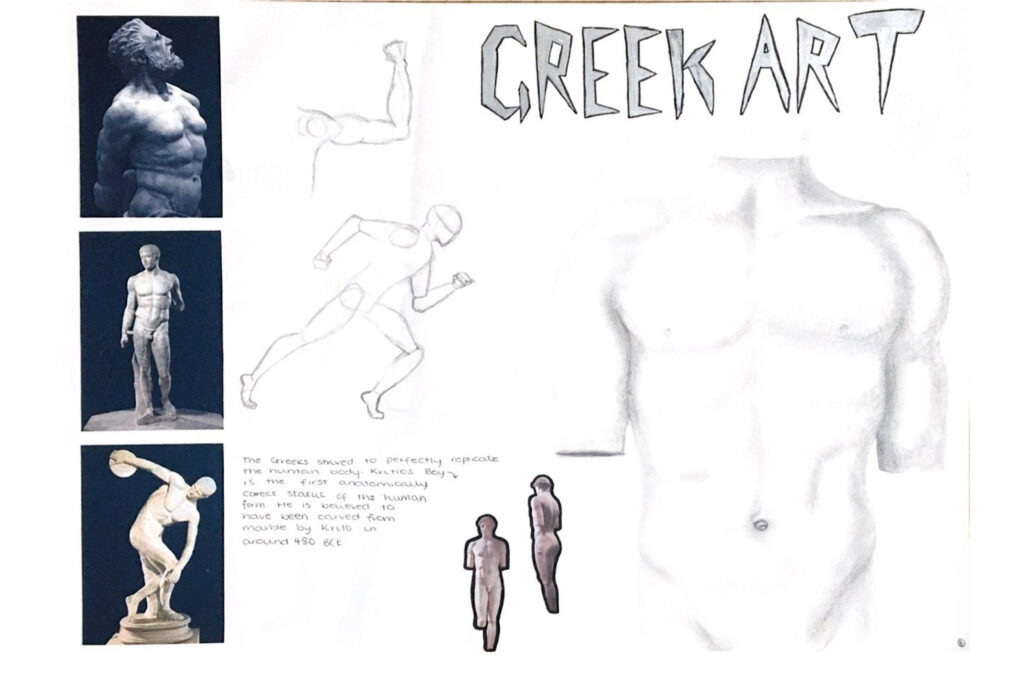
The key milestone of their art could be considered a sculpture simply named as Kritios Boy. This milky white marble statue is anatomically a perfect copy of a human body, and one of the first sculptures to use Polyclitus’ Contrapposto. The contrapposto (or counterpose) is a position where the subject appears to be bearing more weight on one leg so that shoulders and arms are on a different axis to the hips and legs. The head and hips face forwards but the chest is turned away. One arm is raised and the same leg rests upon the ball of the foot. This position creates the pattern of a body which is half in motion, but also half relaxed producing an impression of natural lifelikeness.
But this ‘perfect’ replica wasn’t enough for the Greeks. This realistic image was not as stimulating as the Palaeoliths’ counterpart. We see the human body day in and day out so an exact replica didn’t evoke the intended response of awe in the viewer. This led on to the production of the Riace Bronzes.
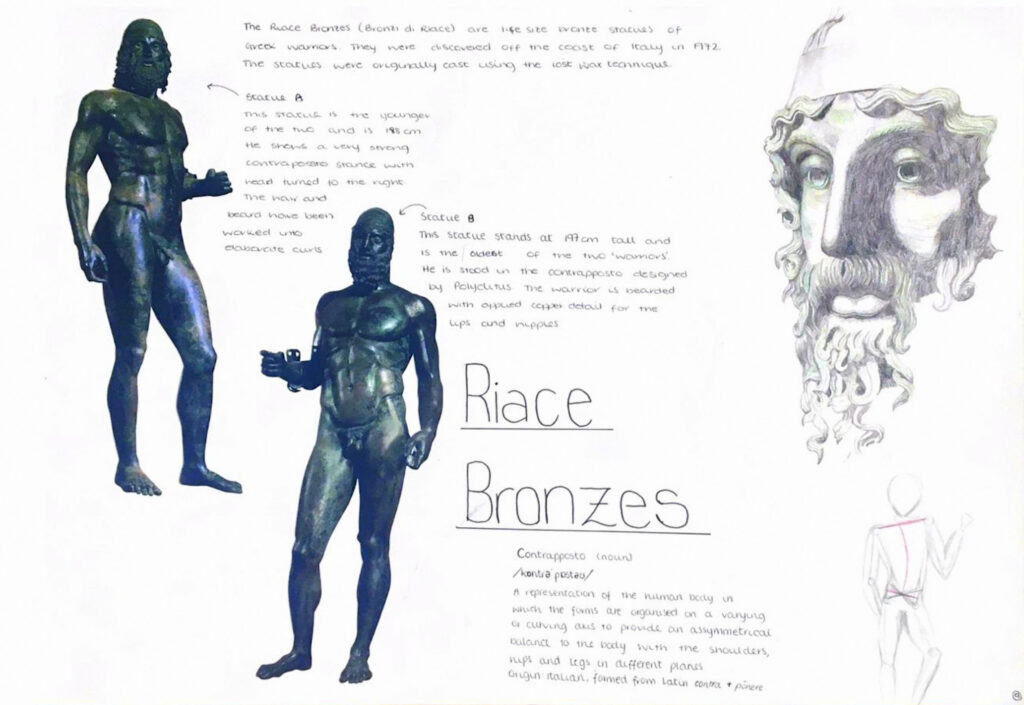
These two bronze statues can only be described as ‘more human than humans’. Once again positioned in Polyclitus’ contrapposto, the two statues reflect a calm, relaxed, divine state of mind. With their perfectly symmetrical abdominal muscles, toned arms and legs, and lack of tailbone, they have an exceptionally perfect flow and harmony about them which simply could not arise in the human anatomy. It is possible that this unattainable divinity and serenity reflected in the statues gives them this ‘Godly’ vibe when in their presence. By being unachievably muscular and shaped, it made the statues seem more attractive and Godlike- the ‘perfect’ humans, if you will- clearly setting the Gods apart. It is possible that a similar influence impacts our modern-day comic book superheroes. Their unattainably muscular bodies are more stimulating- similar to the Venus- giving them this godlike complex making them even more desirable. The progression of Greek art shows that not only do we like exaggerated forms of the human body in art, but also that we prefer them over realistic copies of the human form.
What makes Art, Art?
Throughout this essay I have spoken about art, but it is important to consider what ‘art’ actually is and what constitutes art. Oxford dictionary defines Art as ‘The expression or application of human creative skill and imagination, typically in a visual form such as painting or sculpture, producing works to be appreciated primarily for their beauty or emotional power’. For the purposes of this essay, I am going to use the definition of art outlined by Dr VS Ramachandran’s Laws of art:
- Peak Shift Principle
- Isolation
- Grouping
- Contrast
- Perceptual problem solving
- Unique vantage points or suspicious coincidences
- Art as a metaphor
If we consider some of these rules of art, we can see just why these principles make art of the human body so much more appealing than the real world.
The peak shift principle can be demonstrated with an experiment involving rats (Minini et al. 2006). The rats are taught that when they go to a rectangle of an aspect ratio of 3:2 rather than a square, they receive a favourable stimulus or reward, and so they learn to prefer the rectangle to the square. However, when presented with a choice between the original stimulus (rectangle of 3:2 ratio) and another rectangle of 4:1 aspect ratio, the rats prefer the 4:1 despite having been taught to like the 3:2. What has happened here is the rat has learnt to like the ‘rule’ of rectangularity rather than the actual 3:2 rectangle meaning that when presented with an even more rectangular rectangle they have an even greater response to the stimulus. This is similar to the supernormal stimuli effect, in that the most aesthetically pleasing aspect or features which comply with our preconceived rules of beauty are artificially enhanced to make them even more beautiful.
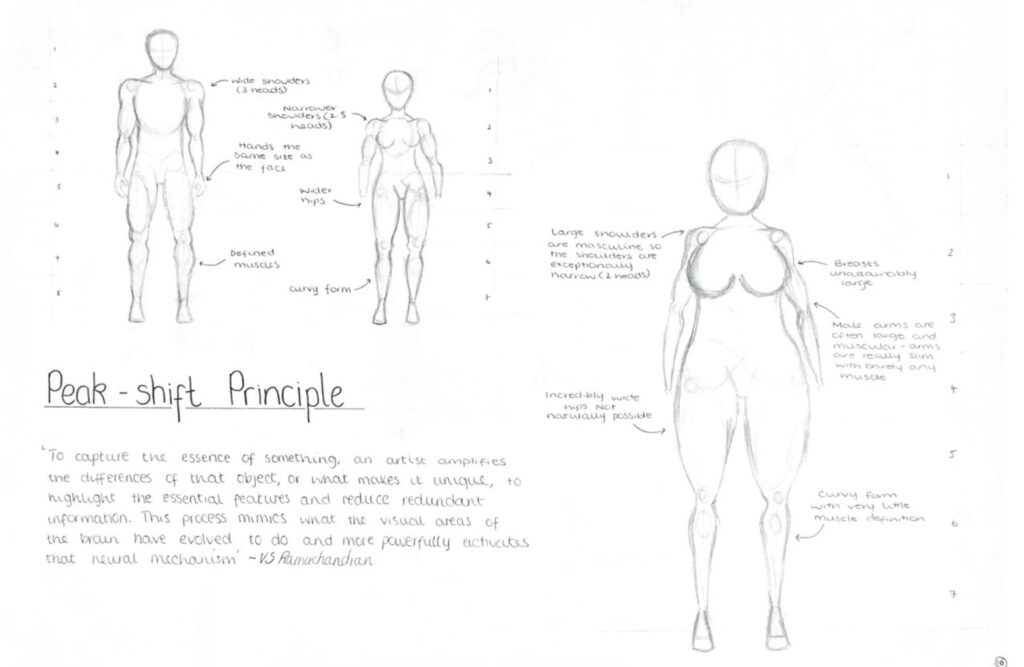
The idea is to remove the ‘average’ body from our ideal body and then to enhance the remaining features to unrealistic proportions. We can see this example in the Venus figurines. For example, the Venus of Willendorf is regarded as the pinnacle of femininity. If we consider the iconic features of the male Palaeolithic body; large arms, muscular legs, prominent facial features, large feet, we can see that not only are these features not emphasised, but they are actually down-sized or removed completely. This results in only the female features remaining in their natural size and position. These features are then exaggerated to shift the peak in optimum aesthetic representation creating this Superstimuli.

Grouping is another technique used as it is pleasing to the brain. It is based on the ‘peek-a-boo’ principle that our brains evolved in camouflaged environments, and so we asked ourselves, ‘what’s the likelihood that these orange spots are separate and what’s the likelihood they are all connected as one organism that has been obscured by some environmental features such as leaves?’. When we figure out what we are seeing it is pleasing to us, which gives us the incentive to continue searching for parts that could be linked which is obviously useful from an evolutionary aspect to help us determine if there is a predator in our environment. An artist can use this to ‘tease’ our neural system; by grouping similar shapes or colours they can create a theme. When our mind discovers this grouping it sends reinforcing pleasurable messages to the limbic system which is a source of aesthetic experience.
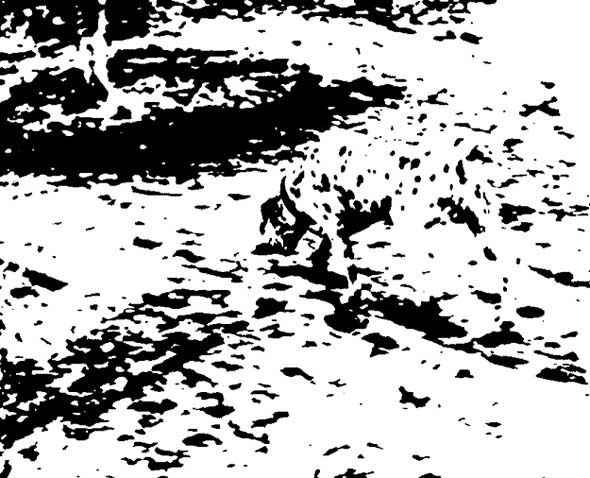
The law of isolation involves removing extraneous features so that only a single cue is left to optimally excite cortical visual areas. This may seem counterproductive as the idea of art is to stimulate more visual regions than the real world, but the brain has a limited attention capacity and by honing in all the focus on to one cue, all distractions are removed which allows for hyper-stimulation of one single cortical region which could not possibly happen in the real world which means we experience a sense of pleasure purely because our brains are stimulated in a different way.

Using unique vantage points or suspicious coincidences in art can be used as a form of schema violation. Our visual experience is made up from very little information from the world around us, coupled with vast quantities of information such as memories and how we expect the world to work meaning that very often we are seeing what we expect to see. This schema violation shows us a new view of an object or person which does not comply with our expectations. These new and unexpected experiences disrupt our ‘functional fixedness’. They force us to abandon our well used neural pathways and form new ones which can lead to an increase in our own creativity.

The Visual Interpretation Pathway
If we put aside the processes involved in the creation of art temporarily, we can instead consider the processes at the other end; the interpretation of the art. Our human brains rely heavily on vision and favour it to the other four senses. It is estimated that a total of 30% of our cerebral cortex contains neurones devoted to vision and visual processing compared to a total of 8% to touch and 3% to hearing. In this third of our brain, there are around 30 areas dedicated to various aspects of vision such as textures and depth. Put simply, art is intended to stimulate more of these areas than the real world.
Visual processing begins with the detection of a visual stimulus. Light hitting the retina of the eyes triggers the breakdown of photoreceptor proteins in the eye triggering a nerve impulse to the visual cortices.
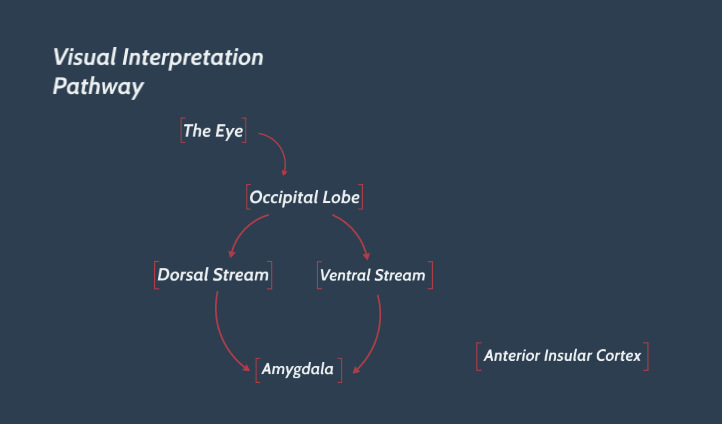
The most popular theory for the next stage of visual interpretation is the two-stream hypothesis. This states that after leaving the occipital lobe, the impulse travels along two pathways; the Dorsal stream and the ventral stream. The Dorsal stream runs from the occipital lobe forwards into the parietal lobe. It is concerned with ‘where’ an object is in space and our own spatial awareness to guide our movements etc. The ventral stream, in comparison, runs from the occipital lobe to the medial temporal lobe and limbic system. It is known as the ‘what’ stream and focuses on object recognition. The medial temporal lobe is involved in the storage of long term memories and the limbic system controls our emotions so it is likely that the ventral stream is the pathway which determines the emotional significance of a visual stimulus.
The amygdala is a network of neurons in the limbic system. It receives sensory inputs and as a result, triggers control responses. The lateral amygdala receives input of visual information and the central nucleus sends impulses to the brainstem. It also activates the hypothalamus which in turn stimulates the sympathetic nervous system resulting in responses such as raised blood pressure or heart rate in order to prepare the body to respond to dangerous stimulus. It generally stimulates visceral responses- emotions triggered by impulse rather than conscious deliberation. The amygdala however is relatively primitive in its emotional ability. Whilst it can trigger feelings of anger or fear- instinctual responses- it cannot convey complex emotions to the body. Furthermore, the emotive states it invokes are unconscious automated responses. In order for us to be consciously aware of our emotions we have two insula in our brains, and within these is a region known as the Anterior Insular Cortex (AIC).
The AIC is responsible for monitoring the body’s state, determining what emotion it is that we are feeling, interpreting the unconscious response, and hence giving rise to conscious emotional experience. The amygdala is located in the basal ganglia- the primitive section of the brain- whereas the AIC is located within the ‘newer’ cerebral cortex so it is possible that early humans only experienced these basic instinctual unconscious emotions and that our ability to detect and therefore regulate our emotions developed as we humans evolved into more controlled and social beings.
Located within the Anterior Insular Cortex, is a dense collection of mirror neurones. First discovered in primates, mirror neurones are neurones which fire both when we perform an action and when we observe the action being performed by another person. It is thought that emotional mirror neurones play a significant role in empathy, helping us to reflect another person’s emotion in ourselves and hence understand how they feel. With regards to visual interpretation, we can use the stimulus of another person’s emotion to determine our own response. For example, viewing someone who appears to be aggressive can trigger a similar aggressive state in ourselves, preparing us for the potential attack.
The Visual Interpretation of Art
When viewing abstract or distorted images, the visual pathway is stimulated differently causing knock-on effects throughout the entire visual system. As mentioned earlier, art stimulates more visual regions than real life.
For example, Pablo Picasso’s art shows almost unrecognisably distorted images of humans, particularly the human face. Human facial recognition is extremely important to us, not only helping us determine friend from foe or relatives from strangers, but also as a basis for attraction and choosing a ‘mate’. The brain contains a selection of specialised cells specifically for the recognition of human faces. Each cell responds to a slightly different view of a face. In the case of Picasso we see this arrangement of facial features as viewed from a wide spectrum of angles which in turn leads to stimulation of multiple face cells rather than a single face cell as happens with the real world. Information from these face cells is then passed up a level to the Master Face Cells. Impulses are sent from the individual face cells and converge in the master face cell which then outputs an exceptionally high impulse frequency. The intensity of a stimulus is translated to the brain by the frequency of impulses so the brain perceives this as a really high stimulus intensity. The impulses pass through the ventral stream which recognises the facial components and concludes that what we are seeing is in fact meant to be a face. From the ventral stream we then reach the limbic system, or more specifically, the amygdala. If impulses to the amygdala trigger emotional responses around the body, then high frequency impulses from a perceived high intensity stimulus will result in a much stronger emotional response.
As the impulse frequency is much higher than any natural stimulus can invoke, we find ourselves in a heightened emotional state which is detected by the AIC but not recognised as it is not a natural state. This is what often causes us to feel that we instinctively like a piece of art or image of a human form but when questioned, we may struggle to specify why. The AIC makes us aware of our emotion but struggles to determine what particular emotion we are feeling. However, stimulus from the mirror neurones reflecting the emotion of the artwork could cause the brain to label our emotional state as being the same as that of the emotion intended in the image which can stimulate a feeling or sense of awe at the power of the image and the influence it has over our emotions.
So, why are we so fixated with unrealistic forms of the human body in art?
Why is the real world not good enough? Why are the distortions so much more appealing? Simply put, the real world is boring. It is what we see day in, day out. But it is needed to provide a contrast against the distorted forms. The real world around us and natural human forms provide us with a baseline level of stimulation, the art provides a stimulation which is above that baseline. If everyone in the world had a body like the Venus of Willendorf then that would determine our baseline and it would take something bigger and better to provide the hyper-stimulation. I guess, that means, that we could reach a point of saturation of these images of the human body. If someone were to view distorted bodies all day, every day, with no natural form as a comparison, would it no longer be beautiful?
So, why are we fixated with unrealistic forms of the human body in art? All of the art we create is influenced by the world we live in. The distortions of these bodies are not random, they are influenced by inborn primal urges, the values and ideals of society, and what we praise and worship in a religious or aspirational context. We like these distortions for many reasons; they depict what we want to be, boosting our own self-esteem through the stimulation of mirror neurones. They hyper-stimulate cortical visual regions, triggering heightened emotional responses. They have flow, harmony, grouping and isolation to create themes and feelings which we never believed could be conveyed through a singular object. They push at the boundaries of our anatomical knowledge and are the embodiment of perfection. They are, in a sense, better than anything we could ever find in our natural world and that is why they are so fixating.
References
Dingfelder, SF. (2010) The Scientist at the Easel. American Psychological Association Vol 41. (No. 2)
Arnunts K, Kedo O, Kindler M, Pieperhoff P, Mohlberg H, Shah N, Habel U, Schneider F, Zilles K (2005) Cytoachitectonin mapping of human amygdala, hippocampal region & entorhinal cortex: intersubject variability & probability maps. Anatomy & Embryology. Vol 210 (issue 5-6) p 343-352
Aldersey-Williams, H. (2014) Anatomies. London: Penguin Books
Boardman, John. Ed. (1993) The Oxford History of Classical Art. Oxford: Oxford University Press, pp. 87-89
Grady, D (1993) The Vision Thing: Mainly in the Brain. Discover Magazine.
Tinbergen, N (1951). The Study of Instinct. Oxford University Press. pp.
Ciotti, G (2014) Supernormal Stimuli: This is Your Brain on Porn, Junk Food, and the Internet. Sparring Mind [Online] Available from: http://www.sparringmind.com/supernormal-stimuli/ [Accessed: December 2014]
New World Encyclopedia (2012) Nikolaas Tinbergen. [Online] Available from: http://www.newworldencyclopedia.org/entry/Nilolaas_Tinbergen [Accessed: Nov 2014]
Whitfield, J. (2009) Classic behavioural studies flawed. Nature. [Online] Available from: http://www.nature.com/news/2009/090342/full/news.2009.186.html [Accessed: Dec 2014]
Hinde, R. A. (1956) Ethological Models and the concept of ‘Drive’. British Journal for the Philosophy of Science. Vol. 24 (No. 6)
Ramachandran, VS. (2000) Neurology and the Passion for Art. [Lecture] Vision Lecture, UCSD Faculty Lecture Series
BBC Horizon. The Creative Brain: How Insight Works, Episode 8 (2013) BBC 2. Thursday 27th June. 00:50
Ramachandran VS, Hirstein W (1999) The Science of Art: A Neurological Theory of Aesthetic Experience
Effective Mind Control (2013) The Amygdala and Emotion. [Online] Available from: http://www.effective-mind-control.com/amygdala.html [Accessed: Nov 2014]
Wikipedia (2012) Insular Cortex. [Online] Available from: en.wikipedia.org/wiki/insular_cortex [Accessed: Oct 2014]
Boundless (2015) Transduction and Perception. Boundless Biology. [Online] Available from: https://www.boundless.com/biology/textbooks/boundless-biology-textbook/sensory-systems-36/sensory-processes-205/transduction-and-perception-777-12010/ [Accessed: Jan 2015]
Department of CLPS, Brown University (2010) Visual Pathways. [Online] Available from: http://www.cog.brown.edu/courses/cg0001/lectures/visualpaths.html [Accessed: Nov 2014]
Tsuchitani, C (1999) Visual Processing: Cortical Pathways. Neuroscience Online. University of Texas Medical School: Texas
Holliday, I (2015) Seeing Sense [Lecture] Aston Inaugurals. Aston University, Sumpner Lecture Theatre, 18th February 2015
Ridout, N (2015) Emotion and Deception [Lecture] Aston Department of Psychology. Aston University, North Wing, 9th March 2015.
How Art Made the World. More Human than Human, Episode 1 (2005) BBC 1. Sunday 26th June, 20:00.