Given the current lock-down situation, many of us now have a lot of time on our hands. So what better time to try out a few little experiments on your co-confined friends or family.
We can test the limits of our ethics at a later date… but for now we can try this simple, iconic study with a few household items:
Ivan Pavlov, a Russian physiologist with rather questionable ethics, was researching salivation in dogs. He initially predicted the dogs would salivate when food was placed in front of them, but his measurements showed that the dogs actually began salivating when they heard the lab assistant’s footsteps. So, what happened?
Well, initially, the dogs salivated in response to the food. This is a logical response, and an important natural reflex. We need saliva to digest and breakdown our food, so in response to food, the dogs salivate. This is an unconditioned response to an unconditioned stimulus.
Over time, the dogs began to associate the sound of the footsteps with the approach of food. Sat in a quiet and boring lab all day, there isn’t much else to do… Every time the dogs heard the footsteps approaching, they were then presented with food and began to salivate. But as they began to associate the sound of footsteps with the imminent arrival of food, they began to salivate in anticipation of an impending meal. As this is a learnt association, not a naturally occurring reflex, we say that this is a conditioned response to a conditioned stimulus. This gave birth to the idea of Classical Conditioning.
So Pavlov, being the fun-loving guy he was, set out to test the bounds of this conditioning process. He experimented with using a bell to condition a salivation response in the dogs. Prior to conditioning, he presented the dogs with food (unconditioned stimulus) and they salivated (unconditioned response). Similarly, he rang a bell (neutral stimulus) and the dogs produced no response. Next, during the conditioning stage, before food was given to the dogs a bell was rung. Over time, an association was made between the sound of the bell, and the arrival of food. As such, when the bell sounded (conditioned stimulus) the dogs began to salivate (conditioned response).
So today’s experiment does not involve locking dogs in labs and ringing bells so see if they dribble; but we are going to try imitating this experiment on ourselves. For this experiment you will need a countdown timer which produces a noise, a small dish of sugar and an unwilling participant, such as yourself.
Before we start the experiment, we must of course gain informed consent from all participants, so just check with yourself that you give consent to participate and remind yourself that you have the right to withdraw at any point. With ethical considerations out of the way, we can begin!
First of all, taste the sugar. You should notice that you salivate in response to the sugar. Next, make your timer ring and you should get no salivation response. Now set your timer to countdown for roughly one minute. It is your choice how long you set, but I would recommend about a minute to keep the experiment short and sweet (pun intended!). When the timer rings, taste a bit of the sugar and then set the timer going again. Repeat this step around 10 times; the more you do it, the better the outcome will be. It is best to stay busy during this time, watching the timer may confound the experiment.
After repeating 10 times, or once you get too bored, wait until the timer goes off and this time, don’t taste the sugar. Instead, pay attention to what happens in your mouth when you hear the timer. It may not happen the first time, so let the timer run through a couple of times and see what happens. If the stimulus has been conditioned, when the timer rings, you should begin to salivate for a few seconds afterwards in anticipation of the sugar.
If the experiment worked, we have taken the unconditioned response of salivating in response the the unconditioned stimulus of sugar, and used that to condition the response of salivation to the conditioned stimulus of the alarm. If it didn’t work, there are a few reasons why:
- You didn’t condition for long enough- Repeating the process of associating the sound of the timer with the arrival of sugar will strengthen this association between the two stimuli and hence produce a more consistent response
- You didn’t taste the sugar close enough to the timer- Pavlov found that the stimuli need to be presented close together in order to create an association; he called this temporal contiguity
- Confounding variables- It is possible that other variables or individual differences may have confounded the experiment
It is also important to note that if the experiment did work, it may just be an element of placebo effect; I’ve told you what will happen, so you experienced it. That is not a freaky-deaky psychic thing, just the power of suggestion. I will talk more about placebo effect in another post, but for now we will just keep it simple.
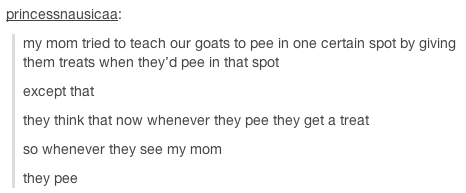
So for now, take home message is that classical conditioning is a method of conditioning a stimulus to produce a different response. But be warned, harnessing the awesome power of classical conditioning doesn’t always go to plan…